Zardozi, Zari & Mirror Work: A Guide to Pakistani Bridal Embroidery
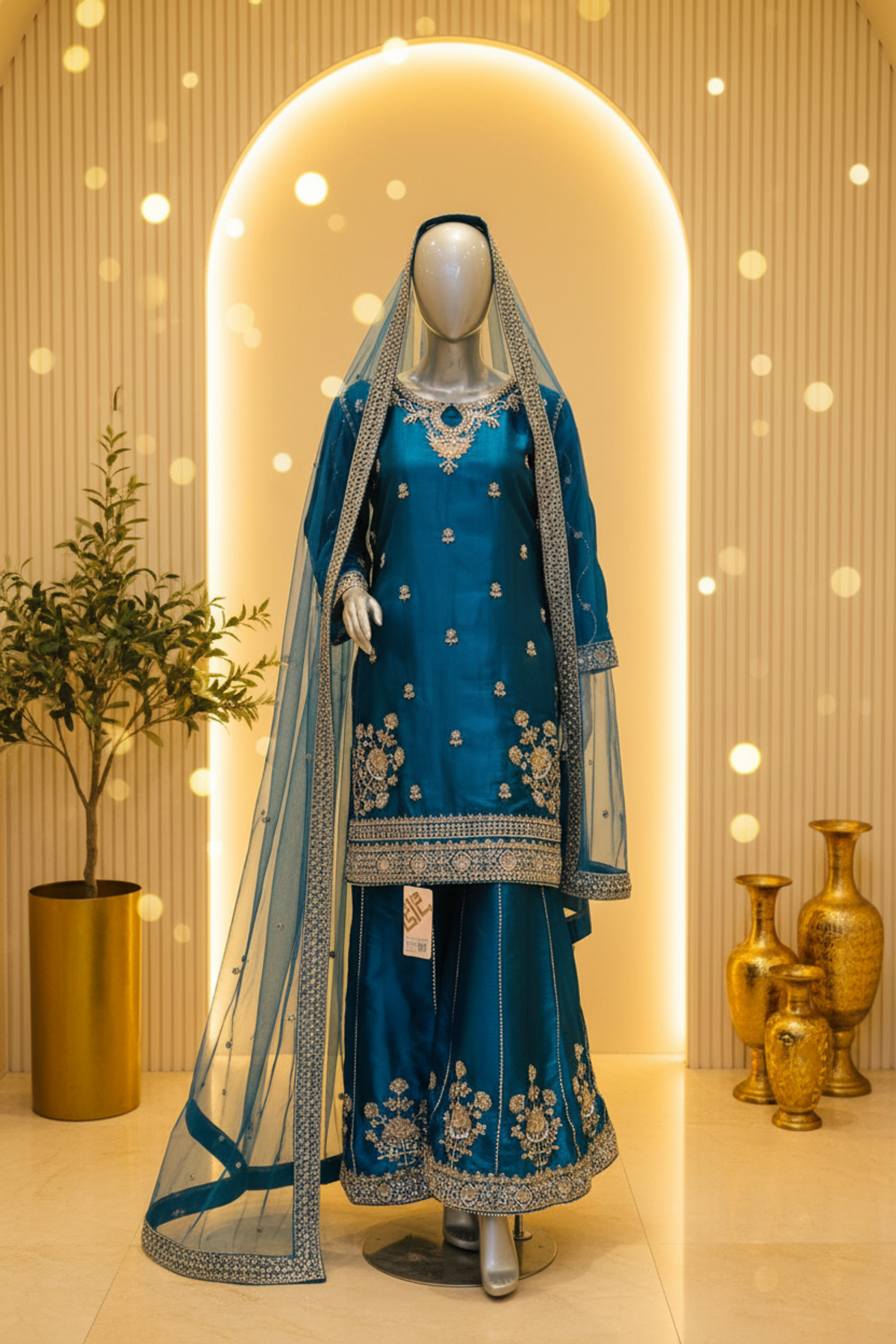
The embroidery vocabulary on a Pakistani bridal outfit — zardozi, zari, dabka, tilla, booti — can be confusing if you're ordering online for the first time. Here's what each term actually means, and what to look for when judging embroidery quality from a photograph.
What is Zardozi Embroidery?
Zardozi is a heavy, raised embroidery technique using metallic gold or silver-wrapped thread, historically associated with Mughal royal dress. On modern bridal wear, it's typically combined with beads, sequins, and stones to build dense, textured motifs — most visible on gharara panels, anarkali necklines, and bridal gown bodices.
Zari, Dabka, and Tilla: Untangling the Terms
Zari refers to the fine metallic thread itself — gold or silver toned — used within embroidery or woven into fabric. Dabka is a coiled metallic wire stitched flat to create a raised, textured line, often used for borders and motif outlines. Tilla is a related metallic thread embroidery style, often finer and used for delicate floral booti. Zardozi is the umbrella technique that frequently combines all three with beadwork.
Mirror Work and Crystal Booti
Mirror work (shisha) uses small reflective discs stitched into embroidery for a bold, dimensional finish — it catches light differently than metallic thread alone and reads as more festive, often seen on gharara sets. Crystal and pearl booti refers to small, repeated floral motifs scattered across a bodice or dupatta, giving a lighter, more delicate finish than dense zardozi panels.
How to Judge Hand-Finished Embroidery from Photos
Hand-finished embroidery has slight, natural irregularity — thread tension varies subtly across a motif, and the work sits raised off the fabric rather than flat. Look closely at close-up product photos: uneven spacing between botis, visible knotting at thread ends, and dimensional texture are signs of karigar handwork rather than machine embroidery. Every embroidered piece from our atelier is finished by hand, never machined.
Caring for Heavily Embroidered Bridal Wear
Dry-clean only — this is non-negotiable for zardozi and dabka work, since water and home detergents can tarnish metallic thread. Store the piece flat or on a padded hanger rather than folded through the embroidered panel, and keep perfume and attar away from direct contact with metallic thread to prevent discolouration over time.
Frequently Asked Questions
What's the difference between zari and zardozi?
Zari is the metallic thread itself; zardozi is the broader embroidery technique that combines zari thread with beads, sequins, and stones to build heavier motifs.
Does heavy embroidery make a bridal outfit heavier to wear?
Yes, more heavily embroidered pieces do carry more weight, particularly gowns with dense zardozi panels. If comfort over a long function is a priority, ask us about lighter booti-work alternatives.
Can heavily embroidered pieces be tailored or resized?
Minor adjustments are usually possible. Share your measurements on WhatsApp before ordering so our atelier team can confirm what's achievable for a specific piece.
How do I clean zardozi or dabka embroidery at home?
Don't — always dry-clean. Home washing or ironing directly on metallic thread embroidery can tarnish or damage the work permanently.