Anarkali vs Sharara: Choosing Your Bridal Silhouette
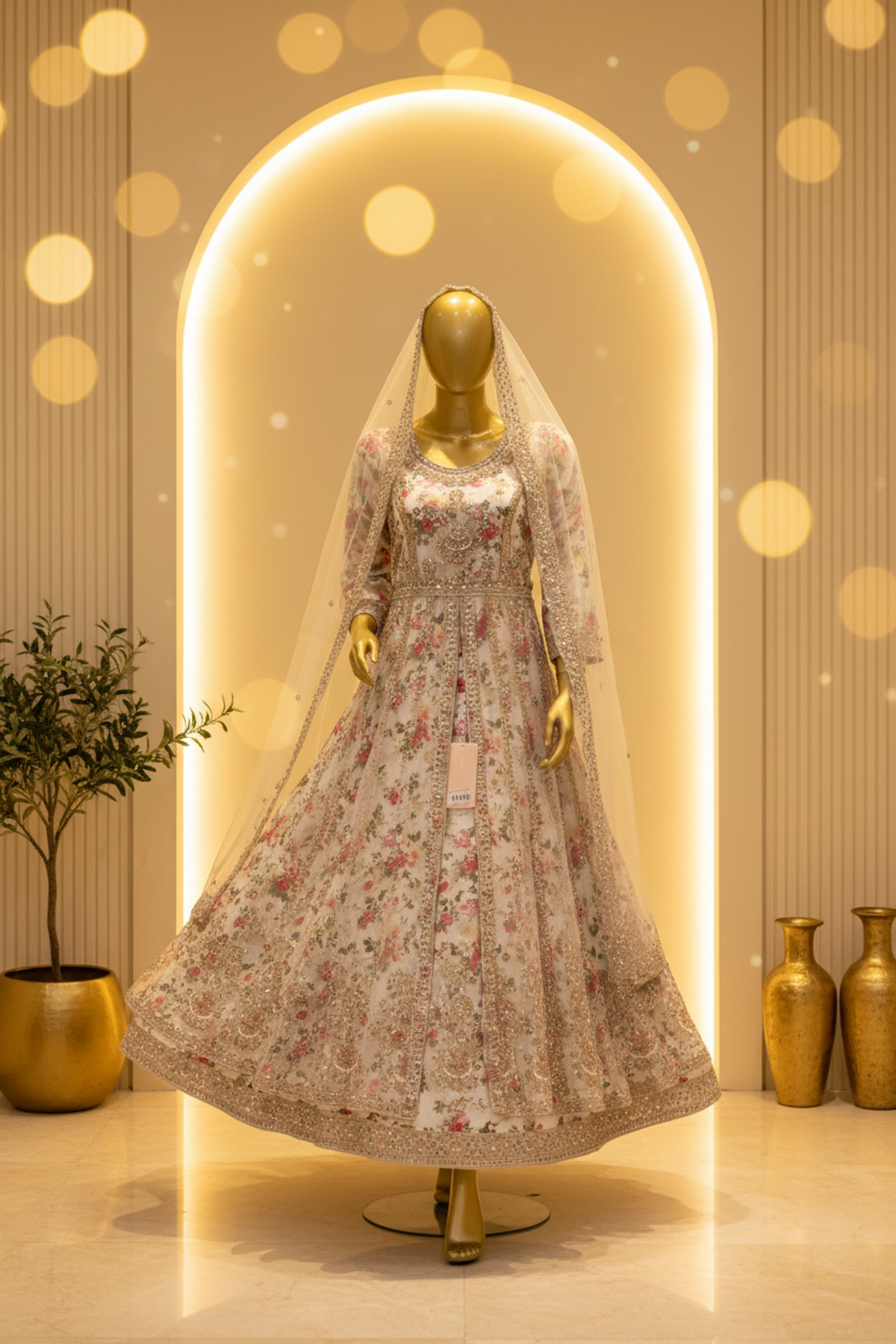
Two of the most requested silhouettes for Pakistani bridal wear are the anarkali gown and the sharara set — and brides often ask us which one to choose first. Both are formal enough for a nikah, baraat, or walima, but they wear very differently. Here's how we help brides decide.
The Anarkali Gown: Floor-Sweeping Drama
An anarkali is a fitted bodice that flares dramatically from the waist or bust into a floor-length gown, often finished with a veil, crystal booti, or floral embroidery along the hem. It photographs beautifully for entrance shots and stage sittings, and the unbroken vertical line is one of the most flattering silhouettes across body types.
Because the skirt is long and full, an anarkali is best suited to functions where you're seated or walking slowly rather than dancing — think nikah, walima, or a formal photo session.
The Sharara: Structured Movement
A sharara pairs a fitted kurta with a wide-legged, flared trouser that moves freely without the length of a full gown. It reads as festive and celebratory, and it's the silhouette we recommend most often for mehndi and dholki functions where dancing and movement are part of the event.
Sharara sets are typically finished with heavy embroidery on the kurta front and hem, giving the drama of bridal wear without sacrificing ease of movement.
Which Silhouette Suits Your Comfort and Body Type
Both silhouettes are designed to flatter a wide range of body types — the flared cut of both the anarkali and the sharara skims rather than clings. The real deciding factor is usually comfort over the length of the event: if you'll be standing, dancing, or moving between functions for hours, a sharara or gharara gives more ease. If your function is largely seated and photograph-focused, an anarkali's dramatic length is worth the trade-off.
Layering: Veils, Dupattas, and Net Jackets
Anarkali gowns are frequently paired with a matching veil for nikah and walima looks, adding softness around the face for photos. Sharara and gharara sets are more commonly styled with a dupatta or an embroidered net jacket/shrug, and often come with a matching potli bag for a finished bridal look.
Matching Silhouette to Your Wedding Timeline
Many brides choose an anarkali gown for their walima — a later, more formal evening function — and a sharara or gharara for the baraat or nikah, where movement and family gatherings play a bigger role. There's no fixed rule here; some brides prefer the anarkali throughout, others alternate. Tell us your full wedding timeline on WhatsApp and we'll help you plan silhouettes function by function.
Frequently Asked Questions
Is an anarkali or sharara better for dancing at a mehndi?
A sharara or gharara is generally easier to dance in since the flared trouser allows more movement than a full-length anarkali gown.
Can an anarkali gown be adjusted if it's too long?
Yes — hem length can typically be adjusted. Share your height and preferred heel height on WhatsApp when you order so we can advise before the piece is finished.
Do sharara sets come with a matching dupatta?
Most of our sharara and gharara sets include a matching or contrast dupatta — this is listed in each product's description.
Which silhouette is more popular for nikah in Pakistan?
Both are common. Anarkali gowns are slightly more popular for nikah and walima; gharara and sharara sets are traditional favourites for baraat.